Crosstalk
Разработчик: Ongakken
Издатель: Ongakken
Crosstalk is a hardware architecture design sandbox with a built-in, fully inspectable simulator and emulator. Players build designs ranging from LED controllers to complex computers using SystemVerilog, then program them. It has a gate-level simulator, introspection tools, a compiler, and more.
Уведомление о цене
Введите желаемую цену в рублях. Сервис проверит цену в вашем Steam-регионе из личного кабинета и сравнит ее рублевый эквивалент с этим порогом.
Языки
Интерфейс, озвучка и субтитры по данным Steam.
| Язык | Интерфейс | Озвучка | Субтитры |
|---|---|---|---|
| английский | ✓ | ✓ | ✓ |
английский
Отзывы игроков SteamPrice
Подтвержденная отметка доступна пользователям, которые выбрали игру в обещаниях и отметили ее пройденной.
Проверяем, доступен ли вам подтвержденный отзыв...
Об игре Crosstalk
Описание из Steam: особенности, режимы и ключевые детали игры.
The mission statement of Crosstalk is that we would like it to bring back the joy of tinkering, designing things from near-scratch, and taking one's time to create something new or recreate retro technology/port cool software. We don't see that much anymore in computing.
Crosstalk is a set of tools to create custom computer architectures, RTL designs, and software. It contains a sandbox with a simulator and an emulator for building electronics. Players can construct and program devices like calculators, LED controllers, and complex computers. It comes with a gate-level SystemVerilog simulator, an elaborator, a synthesizer, and a C emitter, plus the Clang compiler, which compiles the emitted C code and runs it for faster design execution. The C code is derived from players' own SystemVerilog.
The default workflow is opening the RTL workspace, entering a shell, describing a design in SystemVerilog, programming it, and then writing software for it. The game supports a networked mode, in which one collaborates with other players.
Designs, software for them, and emulators can all be shared via the Workshop.
Serial interface
Crosstalk can interface with devices using virtual in-game serial ports or the running machine's physical serial interface, which is /dev/ttyUSB<n> and /dev/ttyACM<n> on Unix and COM<n> on Windows, or its own shell interface. External devices can thus be plugged directly into designs and be represented by stand-in parts. Players could use microcontrollers, sensors, physical buttons, or other computers.
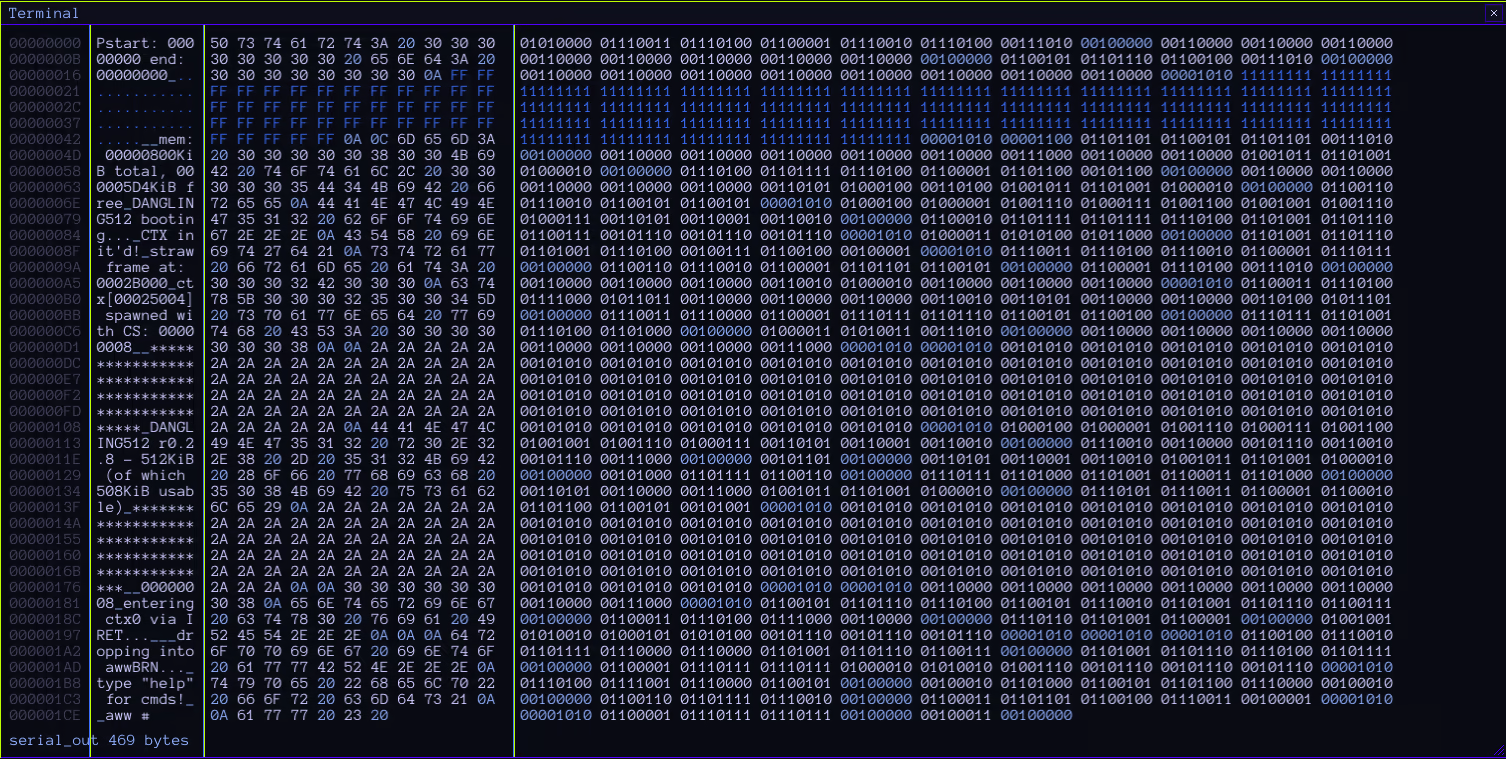
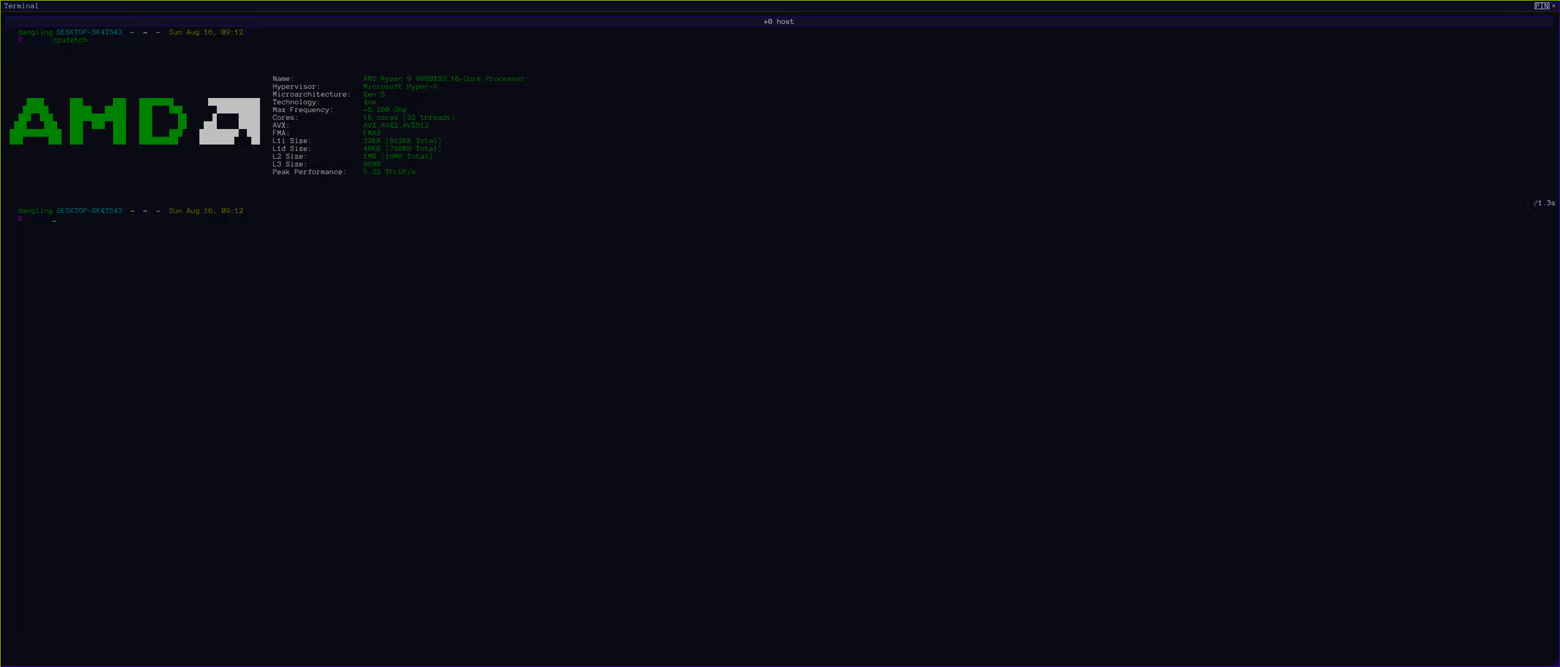
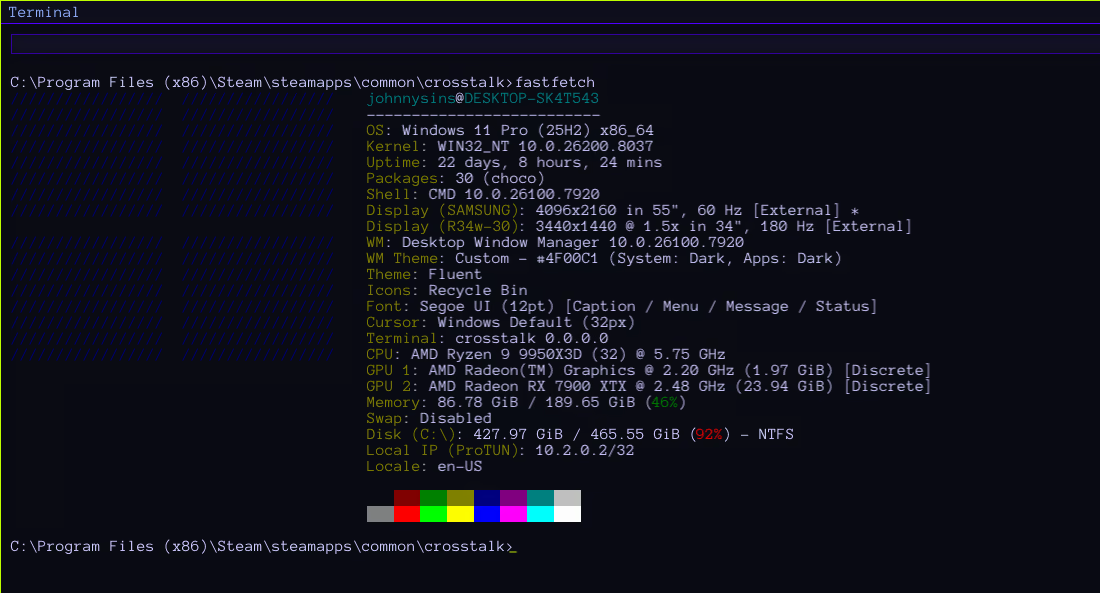
The supplied truecolor terminal emulator can be used as a serial terminal I/O device. It is ANSI/VT100/xterm/kitty-compatible and can interact with the host over a PTY/ConPTY
Serial I/O works with physical devices. The above is TX.
RX
Scopes
Memory view of the running design and an oscilloscope are necessary tools while building, so they're both included and easily accessible to players.
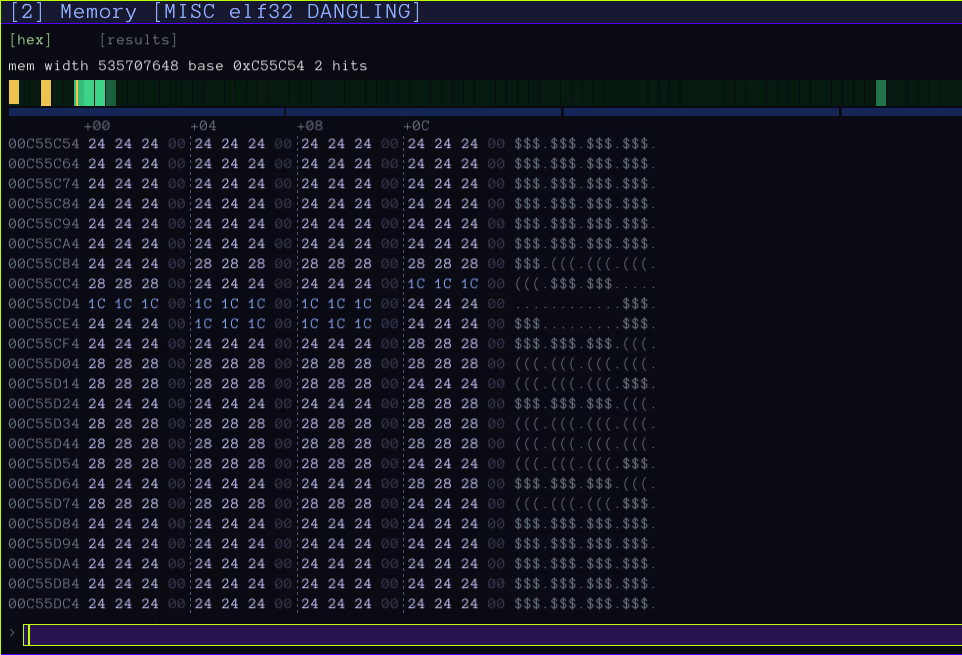
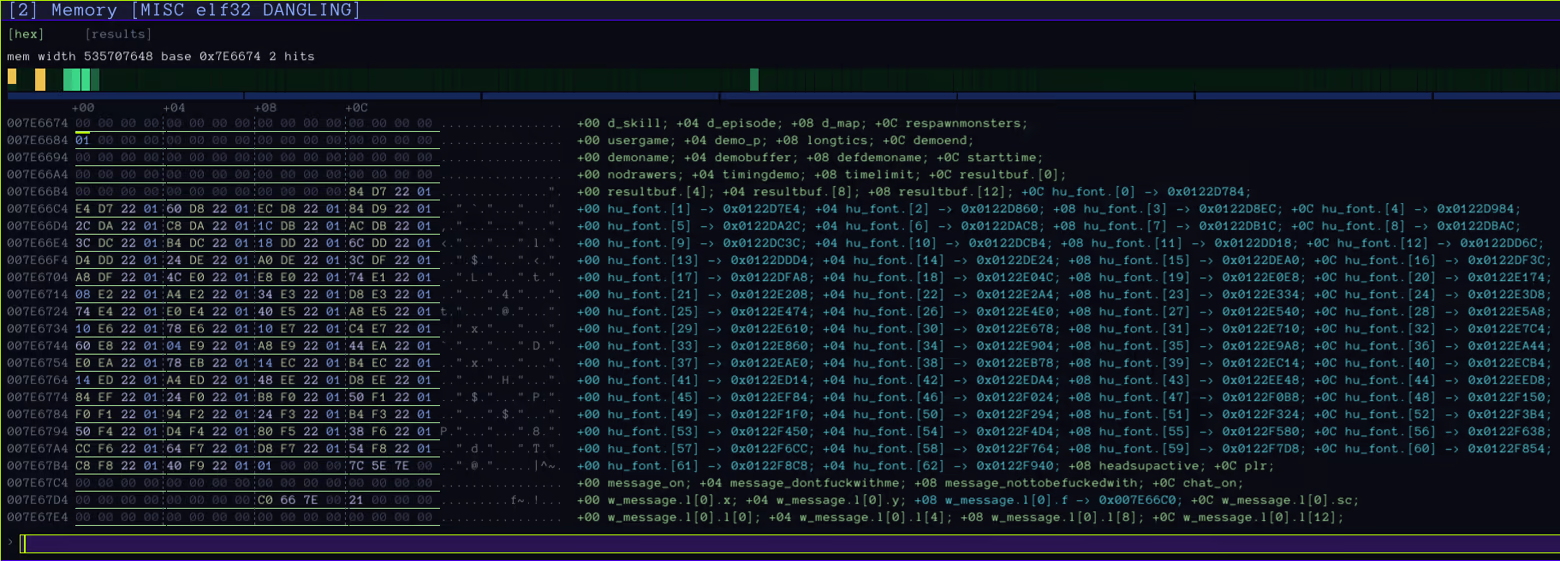
Memory view and runtime activity indication
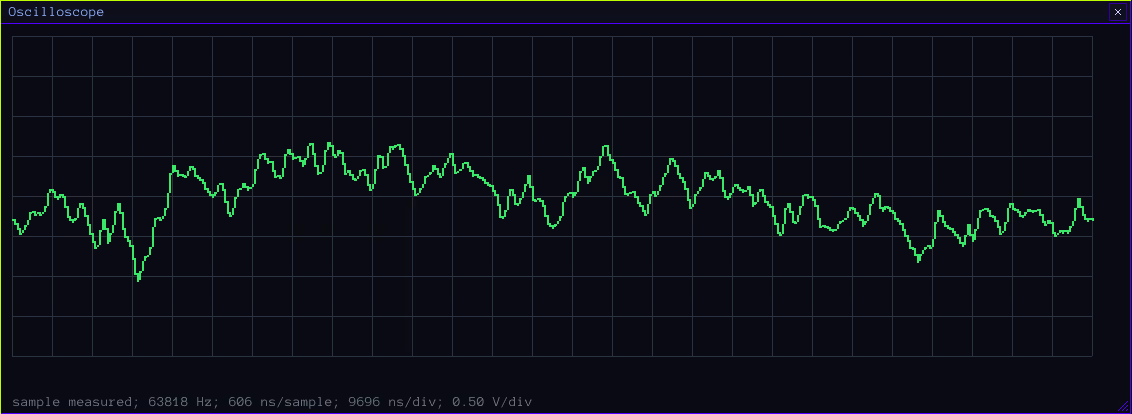
An oscilloscope attached to a signal, like sound output
Display output
If a design has a video display output, then players can use one of the three built-in display modes: CRT, gas-plasma, and modern LCD. The concrete interfaces used are CGA (for CRT and gas-plasma) and VGA.
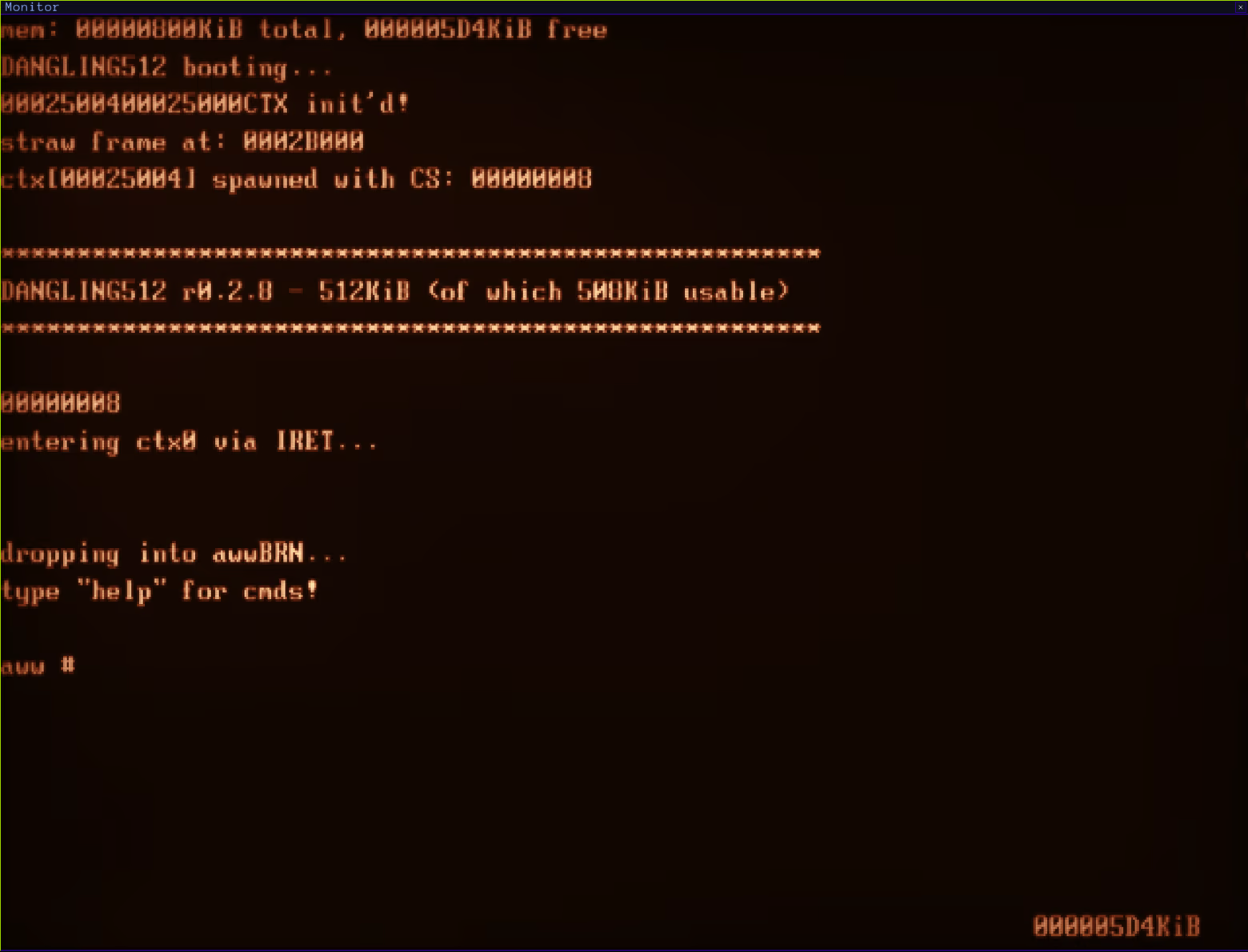
A CGA gas-plasma display output type showing the DANGLING kernel booting on an i386-compatible CPU, in-game
The in-game displays are interactive
CPU architecture design
Players can define ISAs and then view a help banner in the game while developing. Later on, a DLC with a guided ISA design feature set will be released.
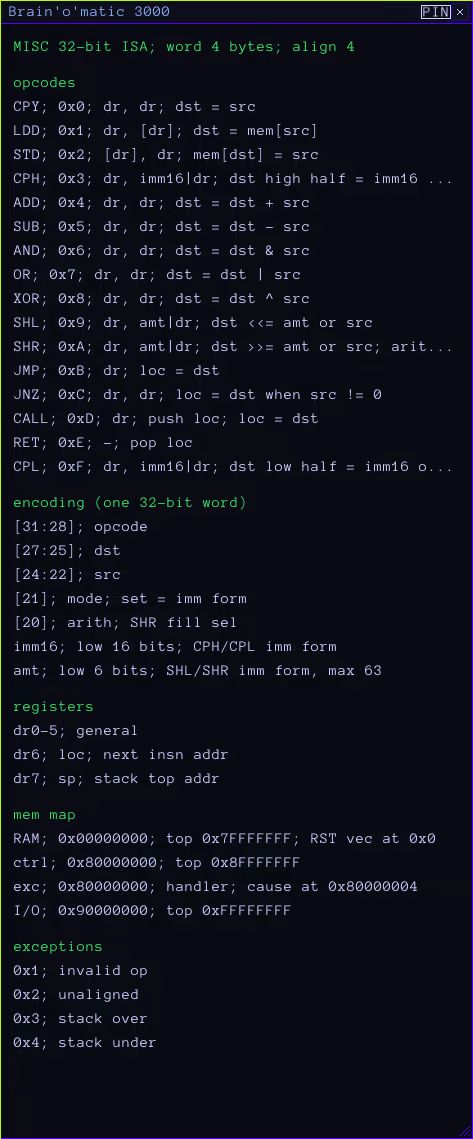
The Minimal Instruction Set Computer ISA
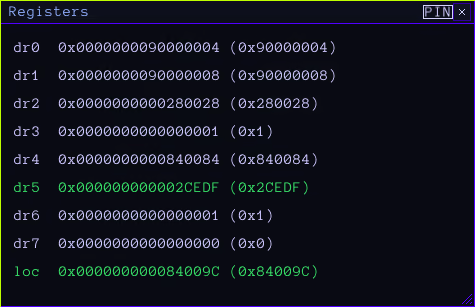
Runtime register state overview
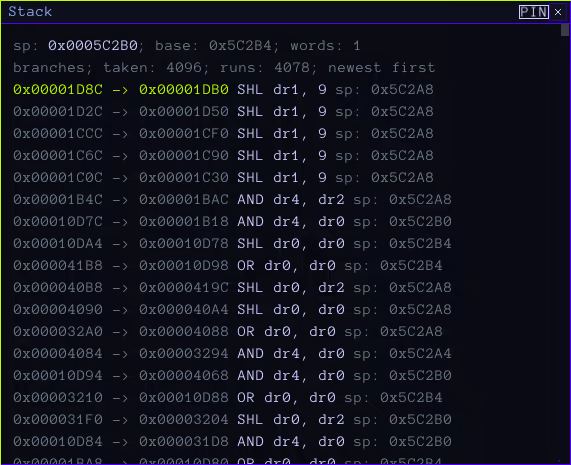
A stack view that shows a trace on faults
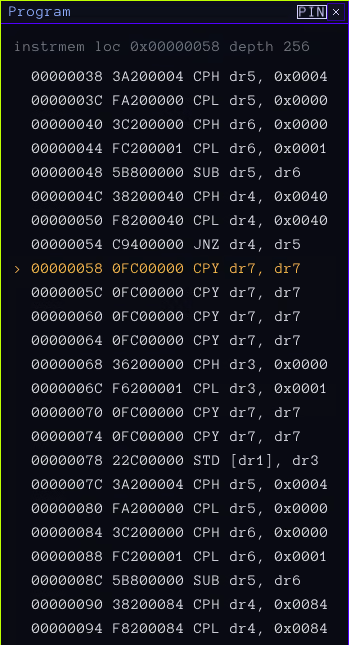
Program locator overview
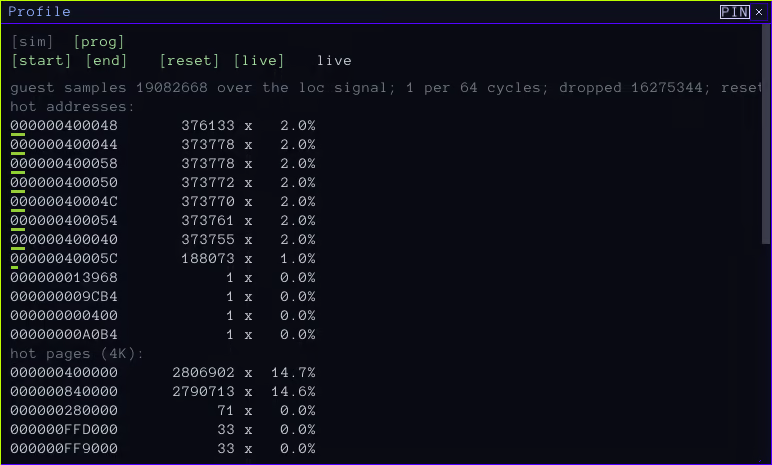
The program-level Profiler mode shows where time is going during a program's runtime
SystemVerilog
FPGA designs can be described using vendor-neutral SystemVerilog. The designs can be RTL-simulated. For accelerated simulation, there is a built-in option to emit C99 from the supplied SystemVerilog using Crosstalk's toolchain and the enclosed Clang compiler, or run it in emulation mode, which disables design accuracy guarantees and reproduces the design behaviorally instead, using the built-in emulator. For high-resolution simulation, a gate-level simulator is available, which runs a synthesized variant of the design. This is an expensive operation, so it takes much longer and is capped to smaller designs.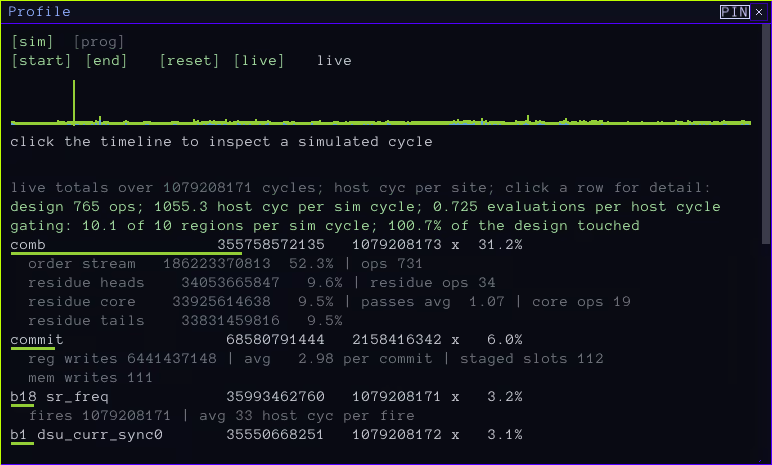
The included Profiler shows an overview of where cycles within the SV design are spent
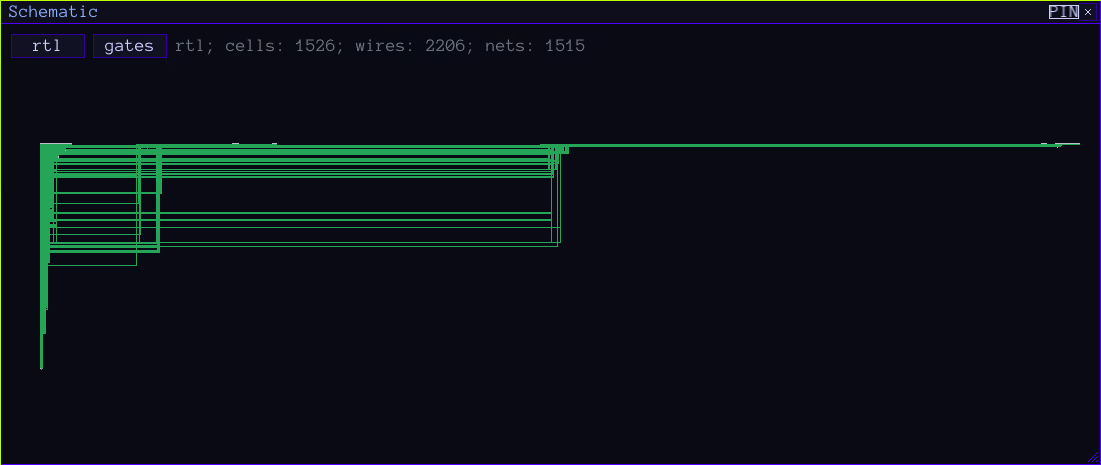
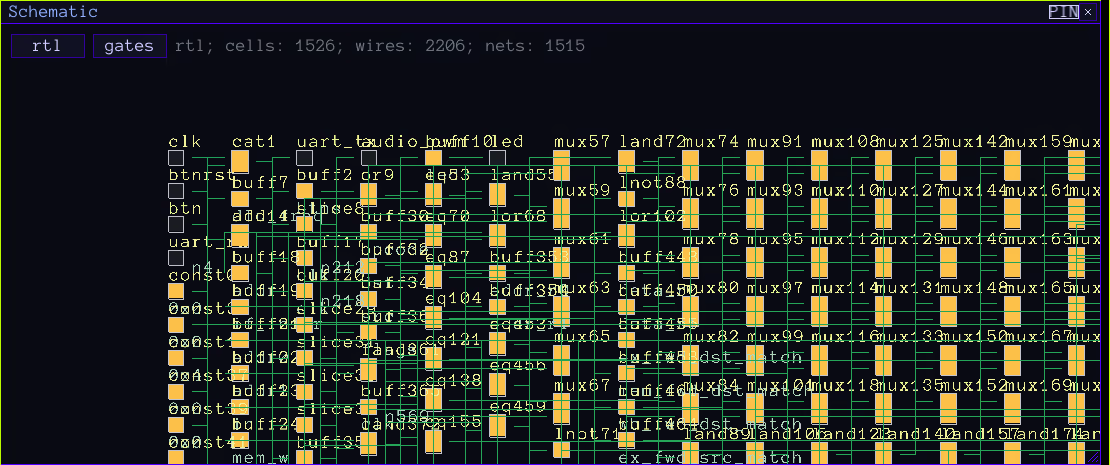
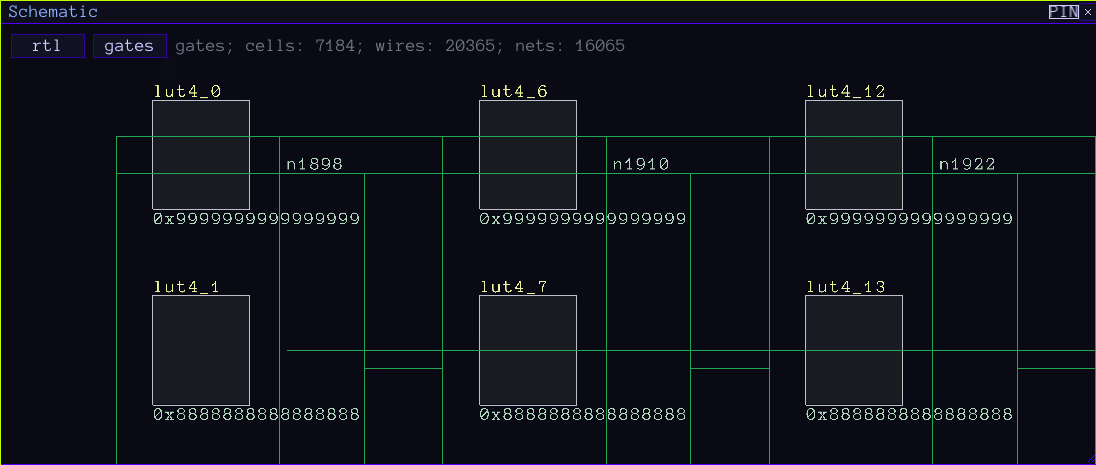
The interactive Schematic viewer shows both the RTL and the gate-level schematic and in profile mode, highlights hot cells
The Minimal Instruction Set Computer ISA + The DANGLING Logic Unit CPU
The game comes with a custom instruction set architecture and its first CPU, which serve as both a reference SystemVerilog implementation and a target for players who don't want to make a custom one. MISC is already capable of running complex programs, despite being very minimal.
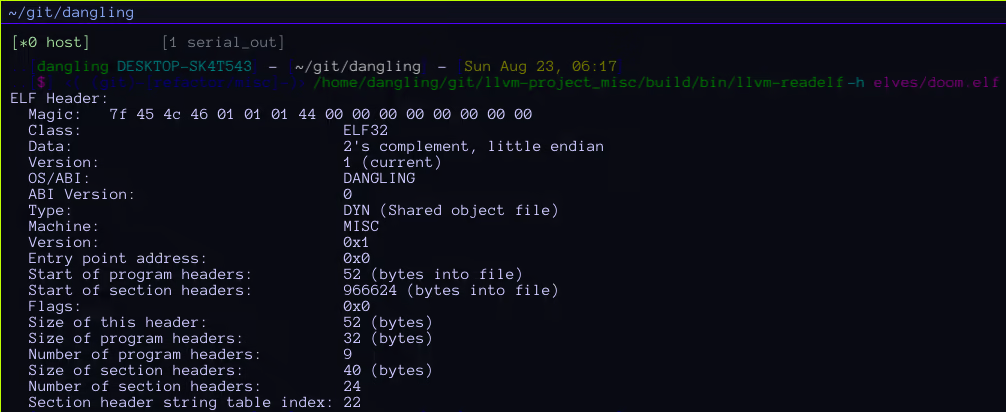
The LLVM that ships with the game can compile for the MISC architecture
A game running native MISC code. Runtime memory manipulation is demonstrated here
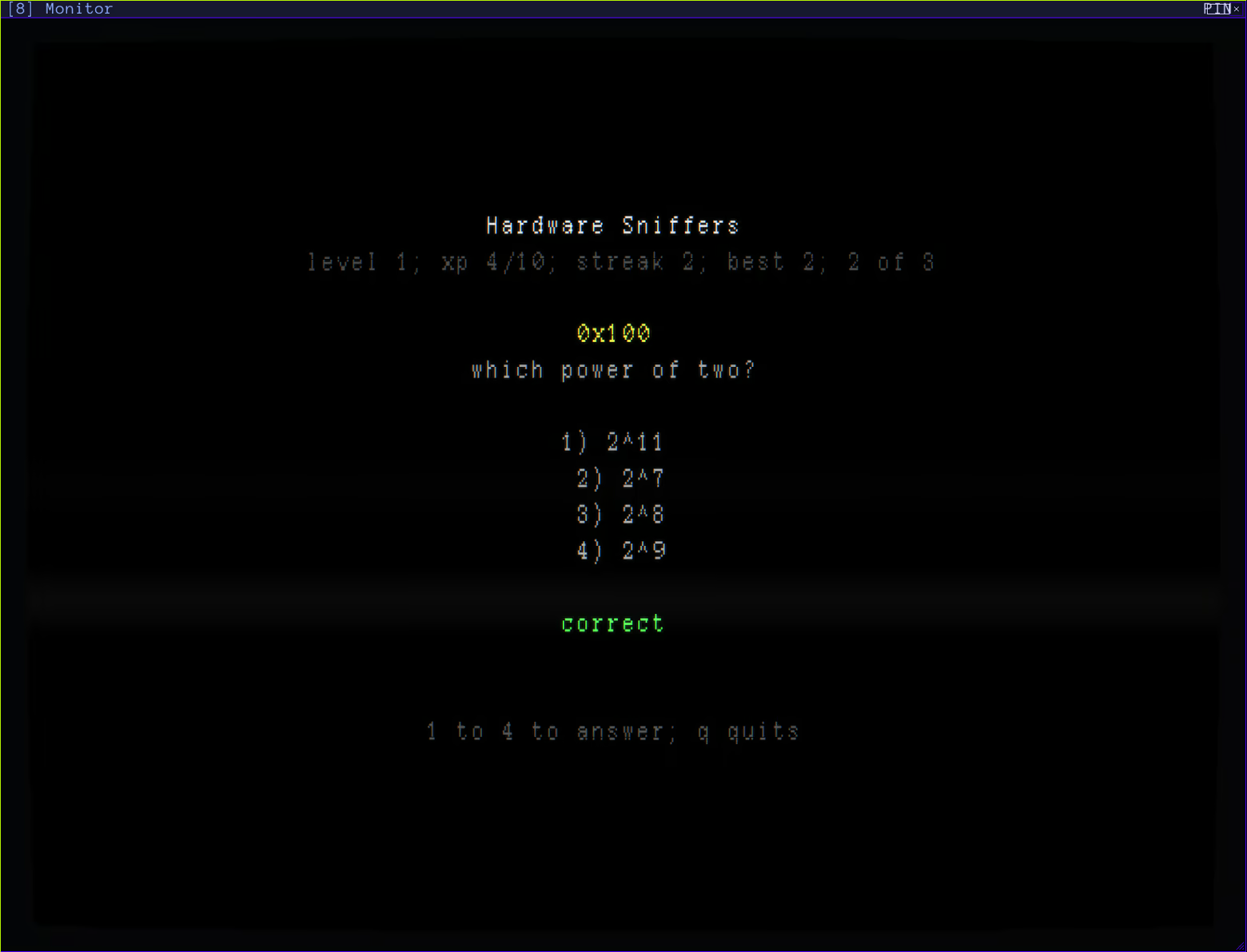
MISC's first custom native game, Hardware Sniffers, coming as a free DLC
A MISC-native C99 reimplementation of the popular crafting game running as the client of the on-screen character, looking from the perspective of another client, which is running an original Java client superimposed on Crosstalk for clearer visual demonstration. The C99 client controls the displayed character by manipulating positions and actions in memory. In this case, only the C99 text client runs under MISC, and is independent of the original client and Java
Sandbox mode
Self-play submode
Sandbox mode is the default Crosstalk experience. Players can create a custom workspace with resizable, positionable, and alignable floating windows. Most use-cases start with opening a shell session to their host, invoking their editor, and writing SystemVerilog. Once there is a valid design, it can be simulated inside Crosstalk.
Networked submode
In this submode, one can team up with others over Steam Networking and build together. It is structurally identical to Self-play mode, but with networking enabled.

Since Crosstalk is mostly a sandbox, play time can reach high hour counts easily. This is just from the time Crosstalk has been wired into Steam (we play it so much)
Похожие игры
Подобрали по жанрам, описанию и близким издателям.
NODE: PROTOCOL
Star Raker

Dear President
FLAGFIGHTS

Who Is This Man

Coreward

MicroTown
Ducky: The Curious
FAQ по Crosstalk
Короткие ответы по цене, скидкам и данным из каталога.
К какому жанру относится Crosstalk?+
Основные жанры и теги в каталоге: Устройства, Программирование, Стратегии, Инди, Симуляторы.
Где искать самые дешёвые предложения по Crosstalk?+
Смотрите таблицу цен Steam по регионам на этой странице. Когда появятся партнёрские предложения, они будут показаны отдельным блоком рядом с ценами.
Системные требования на ПК
- 64-разрядные процессор и операционная система
- ОС: Windows 10 1809
- Процессор: 2.4GHz quad-core
- Оперативная память: 8 GB ОЗУ
- Сеть: Широкополосное подключение к интернету
- Место на диске: 6 GB
- Дополнительно: simulated clock linearly follows single-core frequency multiplied by IPC
- 64-разрядные процессор и операционная система
- ОС: Windows 11
- Процессор: 4.6GHz octa-core
- Оперативная память: 16 GB ОЗУ
- Сеть: Широкополосное подключение к интернету
- Место на диске: 12 GB
- Дополнительно: simulated clock linearly follows single-core frequency multiplied by IPC